


Does Pornography Harm Girls More Than Boys? What Parents of Daughters Should Know

I’ll never forget hearing that girls are often more vulnerable to porn than boys. It was during a conversation with a psychologist who worked with teenagers. He said, “Parents think porn is a boy problem, so they leave girls completely unprotected.” They may get unrestricted access to phones, social media, and YouTube without a blink of an eye.
Shortly afterwards, I assembled a group of teens to get their feedback on a project for youth. I noticed the boys either had no phones or “flip” phones, but the girls all had smartphones and Instagram accounts. They nodded knowingly when I spoke about the ease of access to porn. It was clear they were less protected than the boys.

How porn affects girls is different from how it affects boys
But let’s look at some research.
While boys are generally more likely to report pornography use, girls are by no means unaffected. A clinical review for primary care notes that males report higher use overall, yet female adolescent use is also common (with substantial percentages reported in multiple studies).
That matters because even when girls are not the heaviest users, they may still carry a heavy share of the consequences, including poor mental health.
Related: Girls, Mental Health, and Porn: 4 Toxic Traps That Crush Their Confidence
Pornography and teen girls: where girls may be more vulnerable
UNICEF’s Europe report on online content and children’s experiences of violence gives one of the clearest summaries for parents. It notes that boys are more likely to watch online pornography regularly, and that regular use is associated with sexual coercion, abuse, sexting, and negative gender attitudes.
But the report also emphasizes that girls face disproportionate risks in the same digital environment.
Some of the most concerning findings UNICEF highlights:
- Nearly 80% of girls in one WeProtect Europe survey reported at least one sexual harm in childhood, compared with 57% of boys
- Girls were significantly more likely to experience non-consensual image-sharing, victimization, and online sexual solicitation
- In peer sexual interactions online, girls were much more likely to feel uncomfortable or scared
- “Sexting” often raises boys’ social status while bringing girls criticism and shaming
So are girls “more vulnerable”? In many real-world ways, yes—especially to victimization, shame, and social harm.
Porn and girls’ body image: mental health risks parents should watch for
Research on girls’ mental health also points to a serious concern: sexualized online content can intensify body image pressure and self-objectification.
For example, a qualitative study of parents, school support staff, and youth mental health providers found strong agreement that sexualized images online can worsen girls’ mental health through “comparison” and “pressure to conform.” Participants specifically pointed to body image, self-esteem, and eating-disorder risk as concerns. It also stressed that girls with trauma backgrounds may be especially vulnerable.
While not every study sees a significant gender difference, most studies agree that pornography consumption is associated with higher self-objectification and body comparison in teens.
But the point is this–girls are often facing these pressures in a more sexualized and socially punitive environment.
Related: Your Daughter's Body Image - Healthy or Shameful? 4 Ways to Counteract Toxic Media
[[CTA]]
How pornography affects boys’ attitudes toward girls
This is one of the most important reasons parents of daughters care about this issue.
UNICEF warns that exposure to violent sexual content can reinforce harmful beliefs and behaviors—especially when it interacts with existing cultural messages about dominance, objectification, and control over girls and women. The report also cites studies linking violent pornography exposure with higher odds of sexual violence and problematic sexual behaviors, with stronger effects in boys in some studies.
In everyday life, this can show up as:
- pressure on girls to send sexual photos
- coercive or manipulative dating behavior
- confusion about consent
- normalization of rough or degrading sexual expectations
- shaming girls for the same sexual behavior boys are praised for
Even if your daughter never seeks out pornography, she can still be harmed by what pornography teaches others.
Related: Kids Hurting Kids! 3 Ways Parents Can Reduce the Risk of Child-on-Child Harmful Sexual Behavior
How to protect daughters from pornography–what researchers recommend
The good news? Parents are a powerful protective factor.
We agree with this American Academy of Pediatrics (AAP) advice and other child-health sources that consistently recommend calm, proactive, age-appropriate conversations—especially before teens are fully independent online.
It’s critical to develop trust and explain why online risks can be dangerous, instead of just laying down rules.
Let’s go through some guiding principles:
1) Start earlier than you think
Don’t wait for a crisis. Prepare your daughter with simple, age-appropriate language before exposure happens.
Pornography exposure often starts younger than parents expect. In a Common Sense Media survey, 15% of teen respondents reported they saw porn before age 10.
Consider reading Good Pictures Bad Pictures Guide for Girls: How I Stay Safe, Smart & Confident starting at age 7 or 8.
2) Keep your tone calm and connected
Kids are much more likely to come to you if they expect help, not panic. AAP’s guidance on speaking with teens about risky online content stresses trust, listening, and conversation over lectures.
And if you’ve already reacted with anger, shame or shock, consider these five steps for repairing your relationship by parenting expert, John Fort:
- Calm down
- Own your mistake
- Ask your child how they feel
- Reaffirm relationship
- Do something together
For proactive help responding to a child’s exposure to porn, download this guide from Defend Young Minds, My Kid Saw Porn–Now What? A SMART Plan for Parents.
3) Teach critical thinking about what porn teaches
Help your daughter understand that pornography is designed to arouse, not to teach healthy love, consent, or respect. Every girl needs to understand the difference between healthy intimacy and the toxic sexual scripts promoted by porn.
See this article on Healthy Sex vs. Porn Sex for a chart that shows the clear differences.
4) Teach digital boundaries explicitly
Girls need language to deal with peer pressure, secrecy and the legal and mental health risks of sharing nudes.
Boys need honest and direct teaching about consent, empathy, and dignity.
Both girls and boys need to understand that sexual violence is wrong and can never lead to a happy and successful relationship.
For more guidance and tips for talking with teens, see this article on 7 Ways Porn Kills Marriage.
5) Stay involved and monitor online activity
Sadly, many teens report that adults were not aware of what they were doing online and had not talked with them about online safety in regards to pornography or other sexual exploitation.
Many parents appreciate products like Bark and Qustodio for monitoring their teen’s use of technology.
Related: Do Kids Deserve Digital Privacy? 3 Myths Debunked for Smart Parents
Final takeaway for parents of daughters
When parents ask, “Are girls more vulnerable to porn harms than boys?” the research-based answer is: girls often face different—and in many cases more socially and psychologically damaging—risks, especially around victimization, body image, fear, coercion, and shame.
Boys may be more likely to consume pornography regularly, but girls often bear the relational fallout.
Girls deserve to be prepared to avoid harmful content. When you teach your daughter what pornography is, why it’s harmful, and how to reject it with a simple plan, you’re not scaring her—you’re strengthening her.


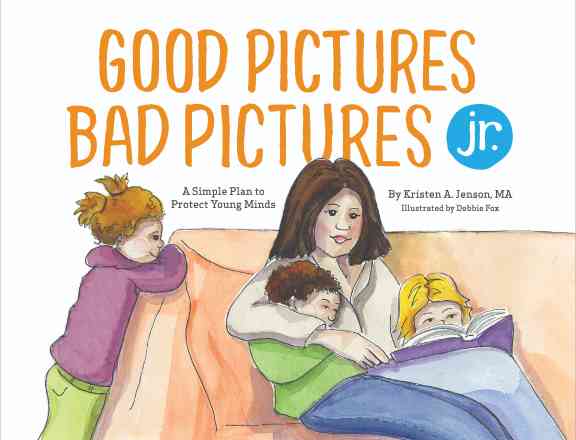
Good Pictures Bad Pictures Jr.
“I highly recommend this book to all people with children. A must have for all parents!” —Amazon Review

