


How to Be a Safe Kid: Is Your Child Only Learning Half the Body Safety Rules?

Most parents already know that 1 in 4 girls and 1 in 20 boys experience child sex abuse. As a result you’ve probably carefully vetted the adults in your child’s life: teachers, coaches, etc. And you’ve likely already had some version of the body-safety talk: private parts stay private, it’s okay to say no, watch out for tricky people, tell a trusted adult, and more.
But what if that’s only half the lesson?
Here’s what many parents don’t know: in more than half of reported cases, the abuser was also a child. And among adolescents, that number jumps to 73%!
Whoa.
It’s called child-on-child sexual abuse, and it means our body safety conversations need to do more than teach our kid how to recognize and respond to sexual abuse. We also need to teach them how to be a safe kid for others.
Kids' easy access to pornography makes this conversation crucial.
Related: Teach Kids Body Safety: Top 9 Books That Help Prevent Sexual Abuse
How pornography exposure influences kids' sexual behavior
Pornography can give kids a sexual script they aren’t ready for.
Children learn by watching.
Anyone who has children has chuckled at how imitative they are. It’s why they “cook” dinner in the sandbox, copying what they see mom do in the kitchen. Kids are wired to imitate the adults in their lives, and much of that learning involves mirror neurons.
But what happens when what they’re watching is pornography?
Associate marriage and family counselor Ashlee Knapp explained:
“Instead of processing difficult experiences through talking, children use play. If a child views pornography and is struggling to make sense of it, they will likely begin mimicking the actions they saw through their play at home or school. They might begin performing sexual acts on toys, on other children, drawing pictures of the acts, and more.”
Pediatrician Dr. Sharon Cooper has also warned about this. Speaking on Capitol Hill, she explained that children's natural tendency to imitate what they see due to mirror neurons, combined with their still-developing brains, can create a dangerous situation when they're exposed to pornography.
A child’s prefrontal cortex—the part of the brain involved in judgment, impulse control, and thinking before acting—is still under construction. In other words, the brain’s “brakes” aren’t fully developed yet.
Pornography introduces sexual behaviors to children long before they're developmentally ready to understand them. And research shows that exposure to sexually explicit content is associated with an increased likelihood of problematic sexual behavior in children (PSB). PSB is sexual behavior that is developmentally inappropriate or potentially harmful to the child or others.
Related:
- The Truth About Porn’s Impact on Childhood Mental Health
- Kids Hurting Kids! 3 Ways Parents Can Reduce the Risk of Child-on-Child Harmful Sexual Behavior
[[CTA]]
Pornography exposure and problematic sexual behavior in children
A 2023 systematic review and meta-analysis examined 27 studies representing more than 16,000 children and adolescents. Researchers found a significant association between exposure to sexually explicit content and PSB in children and adolescents.
Children and adolescents exposed to nonviolent sexual content had 1.82 times the odds of engaging in PSB. For those exposed to violent or live sexual content, the association was even stronger: 2.52 times the odds.
Of course, not every child who encounters pornography will imitate what they see. But with empirical research showing this association, parents can’t assume that because their kid is wonderful, they’d never do something like that. Wonderful kids still need boundaries taught clearly.
How to teach your child to be a safe kid
Parents already teach this principle in countless other ways:
- Don’t hit, even if you’re angry
- Don’t steal, even if a friend dares you
- Don’t bully just because everyone else is doing it
In addition to these, children need to explicitly hear these body-safety rules:
- Never show your private parts to another child
- Never ask another child to show you their private parts
- Never touch another child where their swimsuit covers
- Never ask another child to touch you where your swimsuit covers
Even if you’re curious, another child suggests it, or you’ve seen someone do it in a video or picture.
You might say:
"Sometimes kids see bad pictures or videos. Seeing something doesn't mean you should try it. If you ever see something like that, or if another kid asks you to copy something they've seen, come tell me. You won't be in trouble. These behaviors aren’t something kids should practice on other people, including other kids."
Help kids understand what a “bad picture” is
Of course, for that conversation to work, your child needs to know what a “bad picture” is.
That’s where the Good Pictures Bad Pictures read-aloud books can help. They give parents age-appropriate language for explaining pornography before kids encounter it:
- Good Pictures Bad Pictures: Porn-Proofing Today’s Young Kids helps kids ages 7–12 understand what pornography is, why it’s harmful, and what to do when they encounter it.
- Good Pictures Bad Pictures Guide for Girls: How I Stay Safe, Smart, & Confident gives girls the same foundational protection while addressing situations and pressures they specifically face.
- Good Pictures Bad Pictures Jr.: A Simple Plan to Protect Young Minds uses gentle, age-appropriate language to teach kids ages 3–6 to Turn, Run & Tell when they see a bad picture.
Give your child the brakes: Why clear body safety rules matter
Once your child understands what a bad picture is, add one more family rule:
Whenever you see a bad picture or video, never copy what you saw with anyone else.
Why be this explicit?
Because a child’s prefrontal cortex—the brain’s brakes—is still developing. Until those internal brakes are stronger, our clear rules and ongoing conversations can help provide the brakes.
We must equip them with a plan before curiosity, imitation, or pressure puts them in a situation they aren’t developmentally prepared to handle.
Remember, body safety has two parts: helping kids recognize and respond to unsafe behaviors from others, and teaching them to be a safe kid for others.
Teaching both sides of body safety can help protect our own children and the other children in their lives.

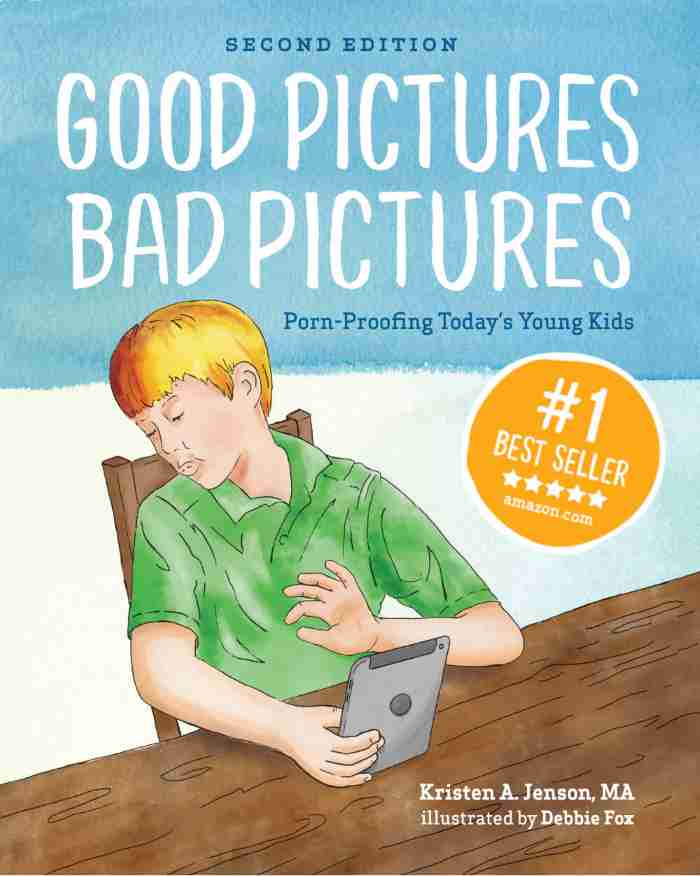
Good Pictures Bad Pictures
"I really like the no-shame approach the author takes. It's so much more than just 'don't watch or look at porn.' It gave my children a real understanding about the brain and its natural response to pornography, how it can affect you if you look at it, and how to be prepared when you do come across it (since, let's face it... it's gonna happen at some point)." -Amazon Review by D.O.